A Gorilla Trekking Company unlocking the Wonders of East Africa. At Marvel Gorilla Adventure, we aren’t just a travel company – we are passionate conservationists, storytellers, and explorers dedicated to connecting travelers with the awe-inspiring world of mountain gorillas and the wild beauty of East Africa.
Gishwati-Mukura National Park is one of Rwanda’s newest and least-explored protected areas, offering a quiet and intimate nature experience far from the crowds. Located in western Rwanda along the scenic Congo Nile Divide, the park covers about 34 square kilometers and is made up of two separate forest reserves—Gishwati and Mukura—connected by ongoing reforestation efforts.
Established as a national park in 2015, Gishwati-Mukura is a remarkable conservation success story. Once heavily degraded by deforestation, agriculture, and human settlement, the forest is now being restored into a thriving ecosystem. Today, it stands as a symbol of Rwanda’s commitment to conservation, biodiversity protection, and sustainable tourism.
Surrounded by rolling hills, tea plantations, and rural communities, the park offers breathtaking scenery, cool mountain air, and a peaceful atmosphere that feels worlds away from busier safari destinations.
Though relatively small, Gishwati-Mukura National Park is a thriving biodiversity hotspot that continues to recover and grow through ongoing conservation efforts. Its regenerating forests provide an important habitat for a variety of wildlife, especially primates and bird species found within the Albertine Rift.
Primates
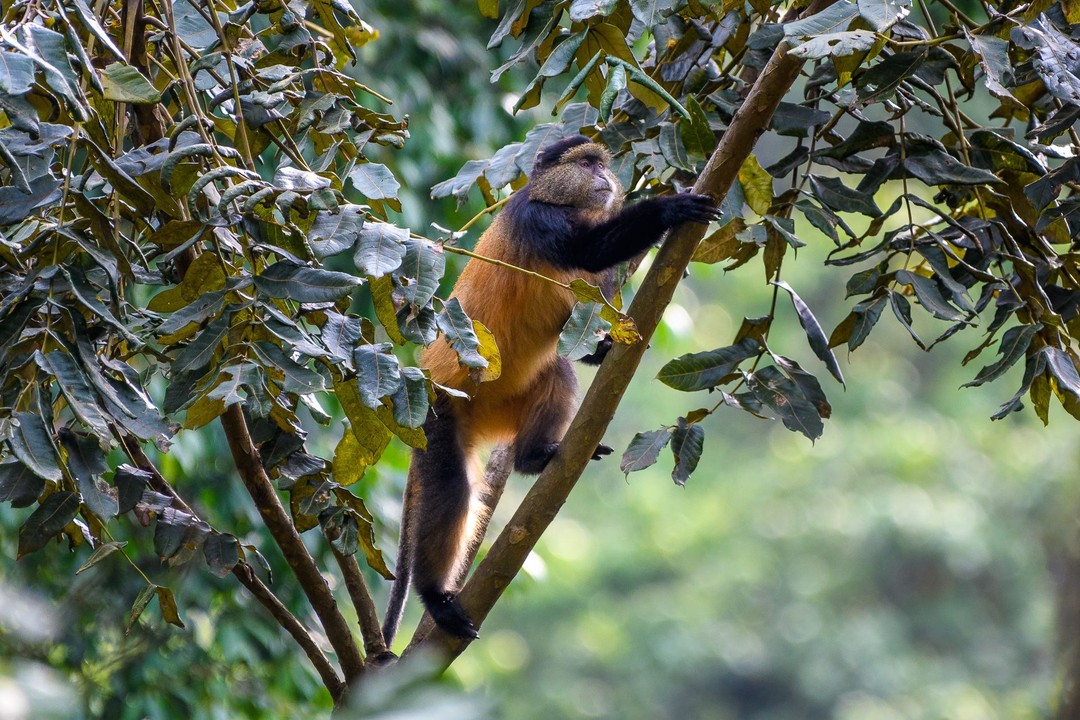
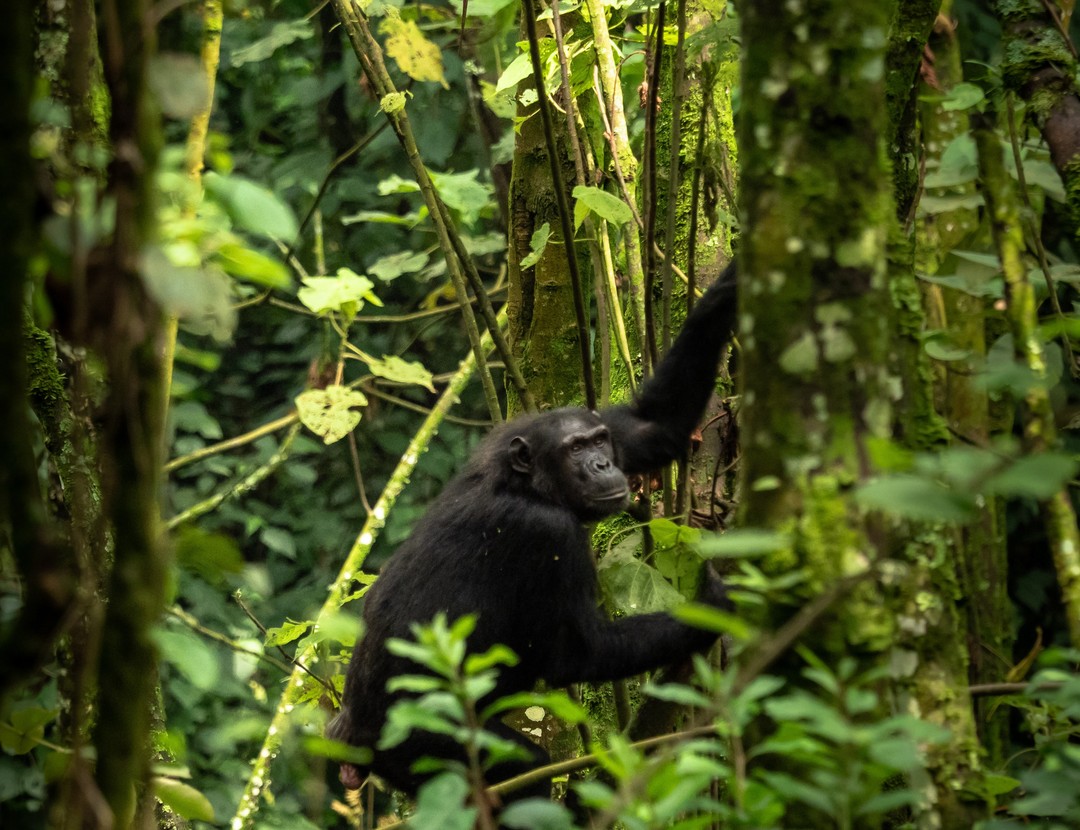
Primates are the most prominent wildlife in Gishwati-Mukura National Park, making it a rewarding destination for primate lovers. The park is home to a small but growing population of chimpanzees, which visitors can track on guided treks through the forest. These treks are less crowded than in larger parks like Nyungwe, offering a more intimate and მშვიდ experience. In addition to chimpanzees, the park hosts several other primates, including L’Hoest’s monkeys, blue monkeys, vervet monkeys, golden monkeys, black-and-white colobus monkeys, and olive baboons, which are often seen moving through the forest canopy or along the trails.
Other Mammals
While large mammals are limited, Gishwati-Mukura supports a variety of smaller wildlife that thrives in its regenerating forest ecosystem. Visitors may encounter species such as black-fronted duikers, bush pigs, hyrax, mongooses, forest cats, and different types of rodents. These animals may be less visible than big game species, but they play an important role in the park’s biodiversity. As conservation and restoration efforts continue, the habitat is improving, allowing wildlife populations to gradually recover and expand.
Birdlife
Gishwati-Mukura National Park is also a great destination for birdwatching, with over 232 bird species recorded. Located within the Albertine Rift, the park is home to several endemic and rare bird species. Birders can spot species such as the Rwenzori turaco, regal sunbird, mountain yellow warbler, Rwenzori batis, Grauer’s swamp warbler, and dusky crimsonwing, among others. The park’s dense forest canopy and varied habitats create excellent conditions for birdlife, making it a peaceful and rewarding spot for both casual visitors and dedicated birdwatchers.
Chimpanzee trekking is the highlight of a visit to Gishwati-Mukura National Park, offering a rare and off-the-beaten-path primate experience. Guided by experienced rangers, visitors hike through the forest in search of a small population of chimpanzees. Since these chimps are not fully habituated, sightings are not always guaranteed, and getting close can be challenging—but that’s part of what makes the experience feel raw and authentic. Compared to Nyungwe, trekking here is quieter and more exclusive, giving you a deeper connection with the forest.
Exploring Gishwati on foot is one of the best ways to experience its natural beauty. The park features several hiking trails of varying difficulty, taking you through dense rainforest, rolling hills, and scenic viewpoints. Some trails even lead to hidden waterfalls, adding to the adventure. Along the way, guides share insights into medicinal plants, forest ecology, and wildlife, making the experience both relaxing and educational.
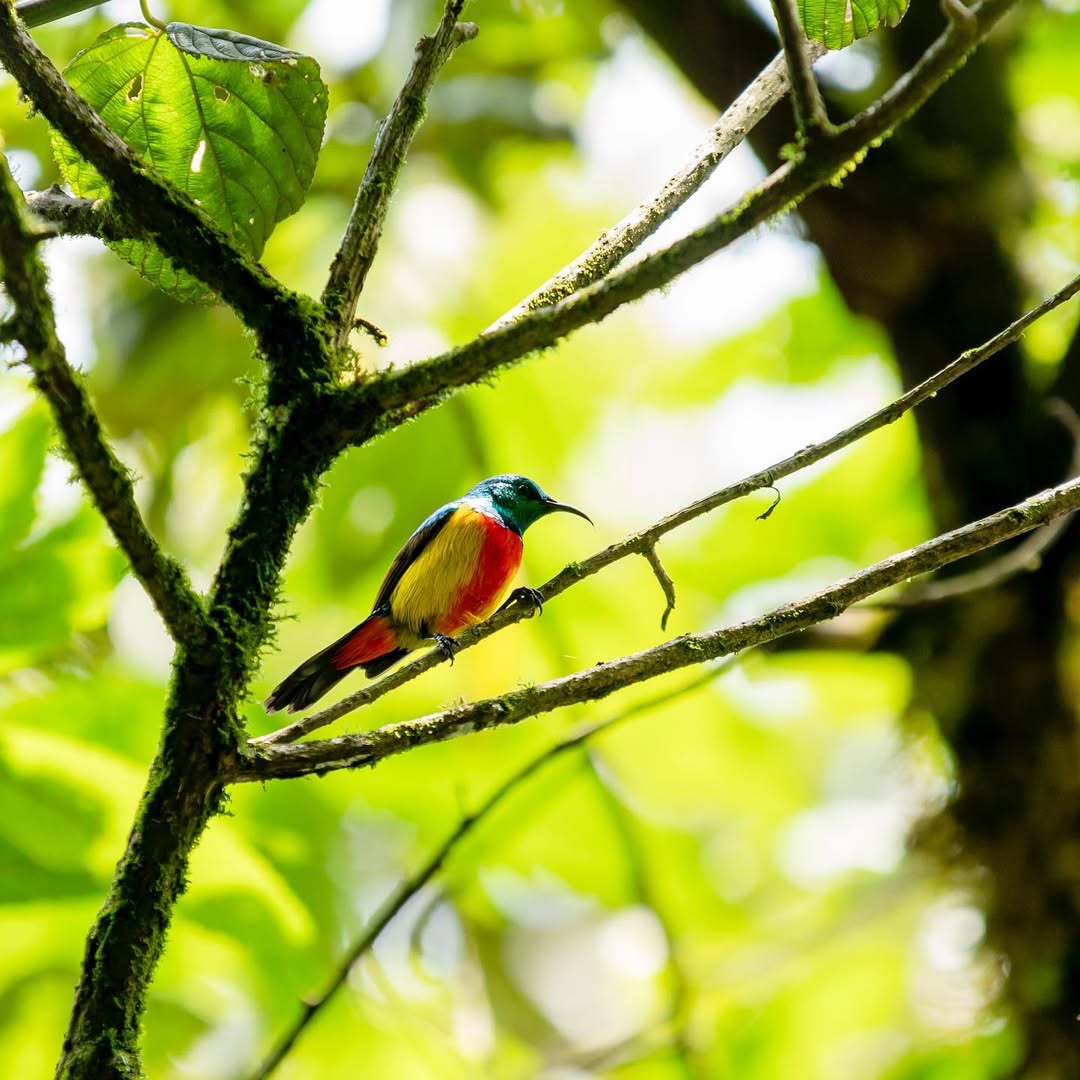
With over 232 bird species, Gishwati-Mukura is a fantastic destination for birdwatching. The forest is home to a mix of endemic and migratory species, making every walk an opportunity for unique sightings. Guided birding tours are highly recommended, as expert guides help identify rare birds and lead you along the best trails, especially during the early morning when bird activity is at its peak.
Beyond chimpanzees, Gishwati is home to other primates, including the lively golden monkeys. Tracking these playful creatures is a rewarding experience, as they move in groups through the forest, often offering great photo opportunities. Guided treks increase your chances of sightings while also introducing you to other primates like blue monkeys and L’Hoest’s monkeys along the way.
A visit to Gishwati-Mukura is not complete without connecting with the surrounding communities. Visitors can explore nearby tea plantations, interact with local farmers, and learn about traditional Rwandan lifestyles. These experiences add a cultural dimension to your trip while supporting local livelihoods and sustainable tourism.
One of the most unique aspects of Gishwati-Mukura is its ongoing restoration story. Visitors can learn about conservation efforts aimed at rebuilding the forest, protecting wildlife, and supporting communities. Some experiences even allow you to participate in activities like tree planting, giving you a chance to contribute directly to the park’s future.
Accommodation options around Gishwati-Mukura National Park are still limited, but there are a few good choices both near the park and around nearby Lake Kivu, offering a mix of comfort, scenery, and accessibility.
Forest of Hope Guesthouse
Located close to Gishwati Forest, this eco-friendly guesthouse is one of the best options for visitors who want to stay near the park. It offers simple yet comfortable rooms in a peaceful setting surrounded by nature. The guesthouse is community-run and supports conservation and local development, making your stay both meaningful and sustainable.
Kivu Lodge (Lake Kivu)
Situated about an hour’s drive from the park, Kivu Lodge offers a mid-range to luxury experience with stunning views over Lake Kivu. The lodge features spacious cottages, a swimming pool, and a relaxed atmosphere, making it a great place to unwind after forest activities.
Cormoran Lodge (Kibuye / Karongi)
This charming lakeside lodge offers cozy cabins built along the shores of Lake Kivu. Known for its beautiful views and tranquil environment, Cormoran Lodge is ideal for travelers looking to combine nature, relaxation, and comfort. Activities like kayaking and boat rides are also available.
Rwiza Village
A budget-friendly option located in Karongi, Rwiza Village offers simple accommodation right by the lake. It’s perfect for travelers looking for affordability without missing out on scenic views and easy access to Lake Kivu’s peaceful surroundings.
Moriah Hill Resort
Overlooking Lake Kivu, Moriah Hill Resort offers comfortable mid-range accommodation with great views, a swimming pool, and good service. It’s a convenient and relaxing base for exploring both the lake and nearby attractions, including Gishwati-Mukura.
The best time to visit Gishwati-Mukura National Park is during the dry seasons (June to September and December to February). During this time, trails are easier to navigate, making chimpanzee trekking and nature walks more enjoyable.
In the rainy seasons (March to May and October to November), the forest becomes lush and vibrant, and birdwatching is excellent. However, trails can be muddy and more challenging.
Gishwati-Mukura National Park is located about 2–3 hours from Kigali by road. The journey is scenic, passing through rolling hills, rural landscapes, and tea plantations.
It can easily be combined with visits to:
Gishwati-Mukura National Park is perfect for travelers seeking a quiet, off-the-beaten-path experience in Rwanda. Unlike the country’s busier parks, it offers peaceful forest exploration, intimate chimpanzee trekking, and uncrowded nature encounters.
The park is also a powerful conservation success story, allowing visitors to learn about forest restoration and sustainable tourism. With rich birdlife, scenic trails, and a strong connection to local communities, Gishwati-Mukura provides a simple yet meaningful way to experience Rwanda’s natural beauty.
WhatsApp us