
A Gorilla Trekking Company unlocking the Wonders of East Africa. At Marvel Gorilla Adventure, we aren’t just a travel company – we are passionate conservationists, storytellers, and explorers dedicated to connecting travelers with the awe-inspiring world of mountain gorillas and the wild beauty of East Africa.
Queen Elizabeth National Park is a true gem in Uganda’s diverse landscape, captivating visitors with its stunning natural beauty and rich wildlife. Spanning approximately 1,978 square kilometers, this remarkable park was established in 1952 and named in honor of Queen Elizabeth II following her visit to Uganda in 1954. Nestled between the majestic Rwenzori Mountains and the shores of Lake Edward, it features a variety of ecosystems, including savannahs, forests, wetlands, and volcanic craters. This incredible diversity makes Queen Elizabeth one of Africa’s premier safari destinations.
As one of Uganda’s most celebrated wildlife sanctuaries, Queen Elizabeth National Park showcases a breathtaking blend of landscapes. Located within the Great Rift Valley, the park stretches across several districts, including Kasese, Rubirizi, Kamwenge, and Rukungiri. The scenic backdrop of mountains, lakes, and expansive savannahs contributes to the park’s charm.
One of the park’s striking features is the Kazinga Channel, a natural waterway connecting Lake George and Lake Edward. This channel is renowned for hosting one of the largest concentrations of hippos in East Africa, attracting various animals that gather along its banks to drink. With its myriad ecosystems, Queen Elizabeth National Park supports an extraordinary range of wildlife and birdlife, making it a must-visit for nature lovers.
Due to its central location and the abundance of attractions, the park is often included in safari itineraries that combine wildlife viewing with gorilla trekking in Bwindi Impenetrable National Park or chimpanzee tracking in Kibale National Park.
Queen Elizabeth National Park is one of the most biologically diverse parks in Africa, home to over 95 mammal species, approximately 10 primate species, and more than 620 bird species. This biodiversity creates a paradise for wildlife enthusiasts and birdwatchers alike.
The park hosts four of Africa’s iconic Big Five animals: lions, leopards, elephants, and buffaloes. The Ishasha sector, in the southern part of the park, is particularly famous for its unique tree-climbing lions. Unlike most lions, these felines frequently climb and rest in the branches of large fig trees, providing a remarkable wildlife spectacle. Leopards, though more elusive, can be spotted during early morning or nighttime game drives.
The park’s savannah plains support substantial populations of herbivores, including Uganda kobs, waterbucks, topis, bushbucks, and warthogs. These animals play a crucial role in maintaining the ecosystem, supporting predator populations and enriching the park’s biodiversity.
The Kazinga Channel is famed for its massive hippo population, estimated at over 5,000 individuals. Boat safaris provide excellent opportunities to see these magnificent mammals relaxing in the water, while Nile crocodiles bask along the shores. Elephants and buffaloes are commonly spotted drinking at the channel’s edge, creating captivating scenes for visitors.
Home to about 10 primate species, Queen Elizabeth National Park is particularly known for the chimpanzees of Kyambura Gorge, often referred to as the “Valley of Apes.” Other primates include black-and-white colobus monkeys, red-tailed monkeys, blue monkeys, olive baboons, and vervet monkeys. Guided forest walks in Kyambura Gorge and Maramagambo Forest provide opportunities to observe these engaging creatures in their natural habitats.
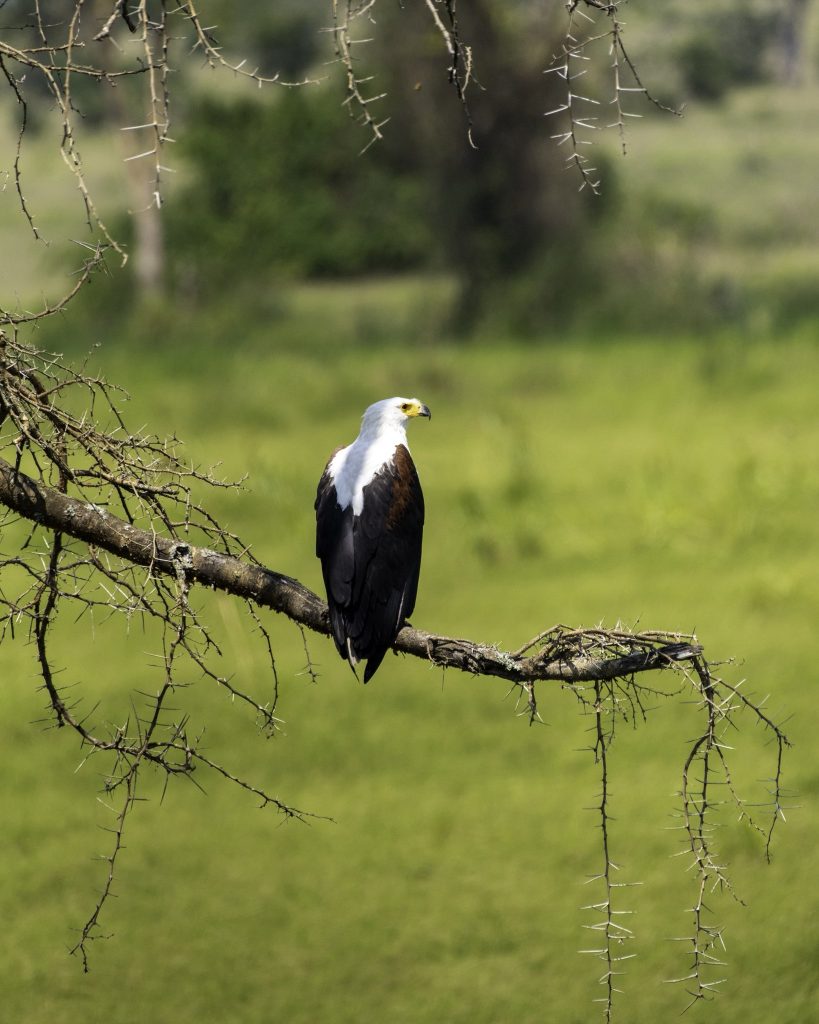
With over 620 recorded bird species, Queen Elizabeth National Park ranks as one of the premier birding destinations in Africa. Notable bird species include the African fish eagle, yellow-billed stork, pelicans, African skimmer, and various kingfishers. The wetlands and channels of Kazinga are particularly rich in birdlife, attracting diverse aquatic species.
Reptiles like Nile crocodiles can often be seen along the banks of the channel, while the Maramagambo Forest’s bat caves are home to African rock pythons, adding further intrigue to the park’s wildlife.
The Kazinga Channel is one of the most famous attractions in Queen Elizabeth National Park. This natural waterway stretches about 32–40 kilometers, connecting Lake George and Lake Edward. It supports one of the largest concentrations of wildlife in the park, particularly hippos and waterbirds.
Boat cruises along the channel allow visitors to see hippos, Nile crocodiles, elephants, buffaloes, and numerous bird species at close range. The shoreline is often busy with animals coming to drink, making the Kazinga Channel one of the best places for wildlife viewing and photography in the park.

The Ishasha Plains, located in the southern sector of the park, are world-famous for their tree-climbing lions. These lions are often seen resting in the branches of large fig trees, a rare behavior that attracts visitors from around the world.
The area is also home to a variety of wildlife including elephants, buffaloes, Uganda kobs, topis, and warthogs. With its open savannah landscapes and abundant wildlife, Ishasha is one of the most rewarding safari areas in Queen Elizabeth National Park.

Kyambura Gorge, often called the “Valley of Apes,” is a deep forested valley cutting through the savannah landscape of the park. The gorge creates a unique rainforest environment surrounded by open grasslands.
The main attraction here is chimpanzee trekking, where visitors hike through the forest with guides in search of chimpanzees. Along the way, trekkers may also encounter other primates, birds, and forest wildlife.
The Crater Lakes Region is known for its beautiful volcanic crater lakes formed by ancient volcanic activity. These lakes are surrounded by rolling hills and lush vegetation, offering some of the most scenic views in the park.
One of the most notable lakes is Lake Katwe, where local communities have practiced traditional salt mining for many generations. The crater lakes area is also a great place for scenic drives, photography, and birdwatching.
Queen Elizabeth National Park offers a diverse range of activities for wildlife enthusiasts, bird lovers, and cultural explorers. From thrilling game drives to serene boat cruises and immersive guided walks, there is something for every visitor.
A boat safari along the Kazinga Channel is one of the park’s signature experiences. Lasting approximately 2–3 hours, the cruise allows visitors to observe a high concentration of wildlife gathered along the channel’s shores.
Common sightings include hippos, Nile crocodiles, elephants, buffaloes, antelopes, and a variety of water birds. The cruise offers a unique perspective of the park’s ecosystems and provides excellent photography opportunities, especially during early morning or late afternoon light. Knowledgeable guides share insights about the animals, birds, and ecology of the channel, making the trip both educational and unforgettable.
Game drives are the most popular activity in the park, giving visitors a chance to witness wildlife in their natural habitats. Safaris are typically conducted in areas such as the Kasenyi Plains, Ishasha sector, Mweya Peninsula, and the North Kazinga plains.
During these drives, visitors can spot a variety of animals including elephants, buffaloes, lions, leopards, Uganda kobs, topis, and warthogs. Early morning and late afternoon drives are the best times for wildlife viewing, as animals are most active during these periods. Experienced safari guides enhance the experience by sharing fascinating insights about animal behavior and tracking patterns.

The lion tracking experience is a unique conservation activity conducted in partnership with the Uganda Carnivore Program. Visitors accompany researchers who monitor lions fitted with radio collars, often in the Kasenyi Plains.
Participants gain first-hand insight into lion behavior, feeding patterns, and social dynamics, while contributing to vital conservation research. Lion tracking is usually conducted in small groups to minimize disturbance and enhance the educational experience.
Guided nature walks provide a more intimate way to explore the park on foot. Visitors can venture into areas such as Maramagambo Forest, Mweya Peninsula, Kyambura Gorge, and the Crater Lakes region.
These walks offer close encounters with birds, primates, reptiles, and unique plant species, as well as opportunities to learn about the park’s ecosystems. Forest walks often reveal hidden wildlife not easily seen on vehicles, including bats, monkeys, and small mammals, making the experience highly rewarding for wildlife enthusiasts.

Chimpanzee trekking in Kyambura Gorge offers an immersive adventure into the forested valley often called the “Valley of Apes.” Visitors hike through dense rainforest in search of chimpanzee families, guided by experienced rangers who provide information on chimpanzee behavior, social structures, and habitat.
Along the trek, visitors may also encounter other primates such as red-tailed monkeys, blue monkeys, olive baboons, and a variety of bird species, making the experience a well-rounded wildlife adventure.
Cultural tours in and around Queen Elizabeth National Park offer visitors a glimpse into the local communities, traditions, and lifestyles. These tours often include visits to nearby villages where travelers can experience traditional dances, music, and crafts.
Visitors may also observe local practices such as fishing, farming, and salt mining at places like Lake Katwe, providing insight into how communities interact with their environment. Cultural tours are an enriching addition to a safari, giving travelers a deeper understanding of the human heritage alongside the park’s natural wonders.
Queen Elizabeth National Park is a birdwatcher’s paradise, with over 620 bird species recorded. The park’s diverse habitats—ranging from wetlands and rivers to forests and savannahs—provide opportunities to spot a wide variety of species.
Popular birdwatching spots include the Kazinga Channel, Mweya Peninsula, Maramagambo Forest, and the Crater Lakes region. Some notable birds include the African fish eagle, shoebill stork, pelicans, kingfishers, yellow-billed storks, African skimmers, and flamingos. Birdwatching can be combined with game drives, boat safaris, or guided walks for a full wildlife experience.
Queen Elizabeth National Park is conveniently accessible by both road and air, making it easy for travelers to include in a Uganda safari itinerary. Whether you prefer a scenic drive or a quick flight, there are options to suit different travel styles.
Traveling to Queen Elizabeth National Park by road from Kampala, Uganda’s capital, covers a distance of approximately 389–420 kilometers, taking around 5 to 6 hours depending on road conditions.
There are two popular routes:
Kampala – Mbarara – Kasese: This is the most commonly used route for road travelers. It passes through Mbarara, providing a chance to stop for refreshments and stretch legs before continuing through rolling hills toward Kasese, near the park’s main entry points.
Kampala – Fort Portal: This alternative route takes you through the scenic landscapes of the Rwenzori foothills, passing small towns and rural villages before reaching the park. It is also convenient for travelers combining visits to Lake Mburo National Park, Kibale Forest National Park, or Bwindi Impenetrable Forest on a multi-park safari.
Road travel offers the opportunity to experience Uganda’s vibrant countryside, interact with local communities along the way, and enjoy views of farmland, tea plantations, and forested hills. For comfort and safety, most safari operators recommend traveling in a 4×4 vehicle, especially during the rainy season when some roads can be rough.
Flying to Queen Elizabeth National Park is the quickest option and provides a spectacular aerial view of Uganda’s landscapes, including lakes, forests, and savannah plains. Domestic flights operate from Entebbe International Airport or Kajjansi Airfield to nearby airstrips serving the park.
Key airstrips include:
Mweya Airstrip: Located near the Mweya Peninsula, this airstrip is ideal for travelers staying in lodges along the Kazinga Channel.
Kasese Airstrip: Convenient for those visiting the northern parts of the park or combining safaris with gorilla trekking in Bwindi.
Ishasha Airstrip: Perfect for accessing the southern Ishasha sector, home to the famous tree-climbing lions.
Flights typically last 1–1.5 hours from Entebbe, significantly reducing travel time compared to road transport, and are ideal for travelers with limited time or those seeking a more comfortable journey. Many tour operators offer chartered flights, which can be scheduled according to your safari itinerary.
Queen Elizabeth National Park is a year-round destination, but the timing of your visit can affect wildlife sightings and overall safari experiences.
The best time for wildlife viewing is during the dry months, when vegetation is less dense and animals gather around water sources. This makes spotting elephants, lions, hippos, and other wildlife much easier. The dry seasons are:
June to September
December to February
During these periods, morning and evening game drives are especially rewarding, as wildlife is more active and visible. Boat cruises along the Kazinga Channel also offer unobstructed views of hippos, crocodiles, and water birds.
The wet months occur from March to May and September to November. While these periods can make some dirt roads slippery, the park is transformed into a lush, green paradise. Rainy seasons provide excellent opportunities for:
Birdwatching: Migratory and resident bird species are abundant during these months.
Photography: Vibrant landscapes and dramatic skies create ideal conditions for nature photography.
Fewer tourists: The park is quieter, offering a more intimate safari experience.
Even during the rainy season, most main attractions are accessible, though some activities such as road-based game drives may be slightly limited in areas with muddy tracks.
Queen Elizabeth National Park’s accessibility by both road and air, combined with year-round wildlife activity, makes it one of Uganda’s most flexible and rewarding safari destinations. Choosing the right season for your interests—whether wildlife, birdwatching, or photography—can enhance your visit and ensure a truly memorable safari experience.
Queen Elizabeth National Park offers a range of accommodations for all budgets, from luxury lodges to budget-friendly camps.
Luxury Lodges:
Mweya Safari Lodge: Perched on the Mweya Peninsula with panoramic views of the Kazinga Channel, offering spacious rooms, a pool, and easy access to game drives and boat safaris.
Kyambura Gorge Lodge: Nestled near Kyambura Gorge, this lodge offers cozy cottages with stunning views of the gorge and forest, perfect for chimpanzee tracking.
Jacana Safari Lodge: Located on the northern shores of the Kazinga Channel, Jacana combines comfort with prime wildlife viewing, ideal for birdwatching and boat safaris.
Mid-Range Lodges:
Ihamba Safari Lodge: Offers comfortable rooms and a serene setting, close to main game drive areas and scenic viewpoints.
Enganzi Lodge: Surrounded by savannah and acacia woodlands, it provides mid-range comfort with easy access to park attractions.
Kyambura Game Lodge: Overlooking the gorge, the lodge is great for nature walks, chimpanzee trekking, and wildlife photography.
Budget Options:
Simba Safari Camp: A simple and affordable tented camp, ideal for travelers who want a close-to-nature experience without breaking the bank.
Mweya Hostel: Basic accommodations suitable for backpackers and budget-conscious visitors, conveniently located near the Mweya Peninsula.
Queen Elizabeth National Park stands out as one of the most diverse safari destinations in Africa. With its rich wildlife, beautiful landscapes, and variety of safari experiences, the park offers something for every traveler.
From game drives across the savannah and boat cruises along the Kazinga Channel to chimpanzee trekking and lion tracking, visitors can enjoy unforgettable encounters with nature.
Whether you are a wildlife enthusiast, birdwatcher, photographer, or first-time safari traveler, Queen Elizabeth National Park promises an extraordinary adventure in the heart of Uganda.
Where is Queen Elizabeth National Park located?
Queen Elizabeth National Park is located in western Uganda between Lake Edward and Lake George near the Rwenzori Mountains.
Why is Queen Elizabeth National Park famous?
The park is famous for its tree-climbing lions, Kazinga Channel boat safaris, diverse wildlife, and excellent birdwatching.
What animals can be seen in Queen Elizabeth National Park?
Visitors can see elephants, buffaloes, lions, leopards, Uganda kobs, chimpanzees, warthogs, and many other wildlife species.
How many bird species are found in the park?
More than 620 bird species have been recorded in Queen Elizabeth National Park.
What is the best time to visit Queen Elizabeth National Park?
The best time to visit is during the dry seasons from June to September and December to February, when wildlife viewing is easier.
WhatsApp us


