
A Gorilla Trekking Company unlocking the Wonders of East Africa. At Marvel Gorilla Adventure, we aren’t just a travel company – we are passionate conservationists, storytellers, and explorers dedicated to connecting travelers with the awe-inspiring world of mountain gorillas and the wild beauty of East Africa.
Lake Nakuru National Park is one of Kenya’s most iconic and accessible wildlife destinations, known for its shimmering alkaline lake, vast flocks of flamingos, and strong rhino conservation success story. Located in the heart of the Great Rift Valley, just a few hours’ drive from Nairobi, the park offers a compact yet incredibly rewarding safari experience. Whether you are a first-time visitor to Kenya or adding it to a larger safari itinerary, Lake Nakuru delivers diverse wildlife, scenic landscapes, and excellent birdwatching all in one place.
Established in 1961 and later designated as a national park in 1968, Lake Nakuru National Park covers approximately 188 square kilometers. Despite its relatively small size compared to other Kenyan parks, it is packed with wildlife and natural beauty. The park is centered around Lake Nakuru, a shallow soda lake that attracts thousands—sometimes millions—of flamingos, creating a breathtaking pink fringe along the shoreline.
The park is fully fenced, which has helped protect endangered species such as rhinos and Rothschild’s giraffes. This makes it one of the best places in Kenya to reliably see both black and white rhinos in their natural habitat.
Lake Nakuru National Park is more than just a lake—it is a diverse ecosystem of acacia woodlands, grasslands, rocky escarpments, and euphorbia forests. The dramatic backdrop of the Rift Valley escarpment adds to the park’s scenic appeal, offering panoramic viewpoints that are perfect for photography.
One of the highlights is Baboon Cliff, a popular viewpoint that provides sweeping views over the lake and surrounding plains. Another must-visit spot is Lion Hill, which offers equally stunning vistas, especially during sunrise or sunset. The Makalia Falls, located in the southern part of the park, is a beautiful seasonal waterfall surrounded by lush vegetation.
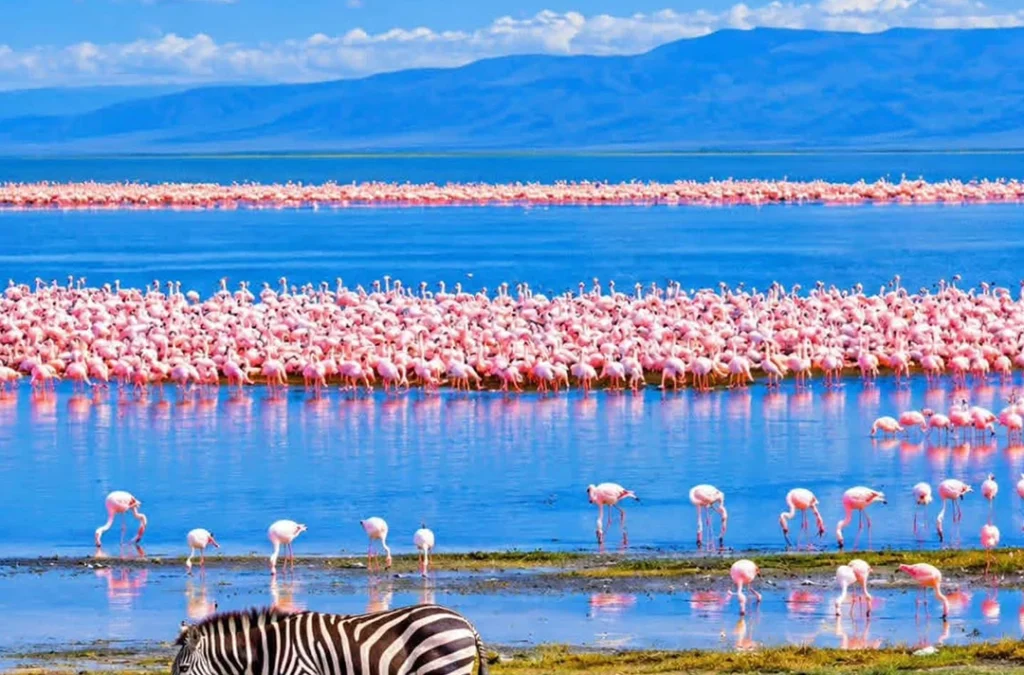
While Lake Nakuru is best known for its flamingos, the park supports a rich variety of wildlife within its compact landscape. It is especially important as a protected rhino sanctuary, offering one of the most reliable places in Kenya to see both black and white rhinos. Sightings are common, often in open grasslands or near water sources, making Nakuru a standout destination for conservation-focused safaris.
The park is also home to the endangered Rothschild’s giraffe, easily recognized by their lighter coats and lack of markings below the knees. They are frequently seen browsing among acacia trees. Large herds of buffaloes, along with zebras and impalas, roam the plains, while waterbucks tend to stay close to the lake and wetland areas.
Predators are present as well. Lions are regularly spotted, sometimes resting in the shade or moving through the grasslands during cooler hours. Leopards, though shy and harder to find, inhabit the woodlands and are occasionally seen by patient visitors.
Although elephants are not found in Lake Nakuru, the park’s diversity of other mammals, combined with its accessibility and scenic setting, ensures a rewarding and well-rounded wildlife experience.
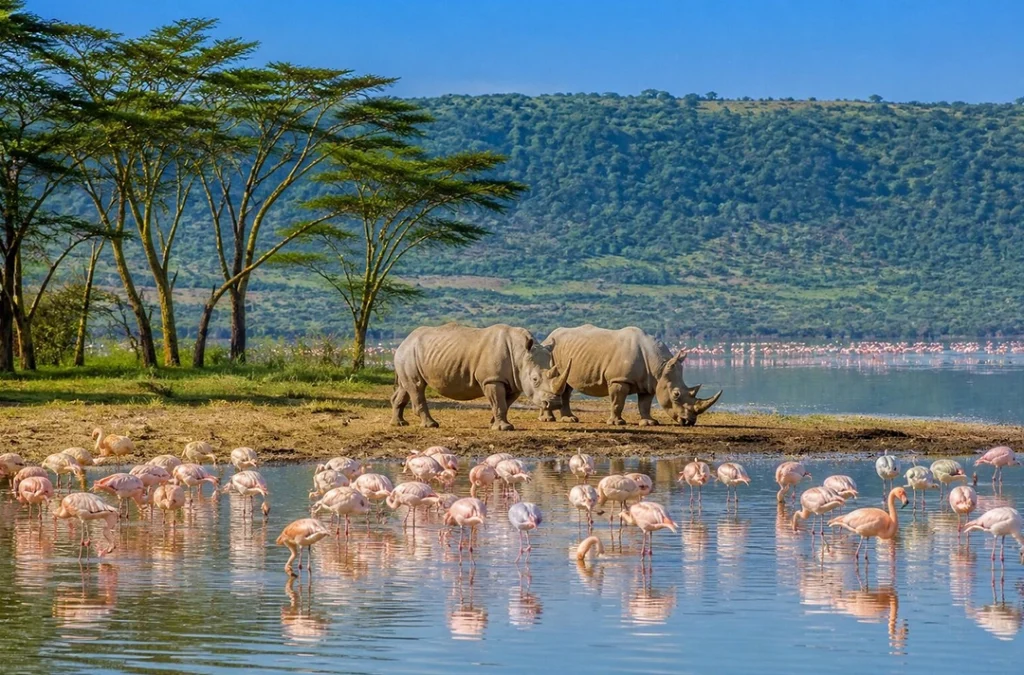
Lake Nakuru is one of Africa’s most famous birdwatching destinations, with over 400 recorded bird species. The lake’s alkaline waters attract vast numbers of lesser flamingos, along with greater flamingos, pelicans, cormorants, and other water birds.
The number of flamingos can vary depending on water levels and food availability, but when conditions are right, the sight of thousands of birds gathered along the lake is truly unforgettable. Beyond flamingos, bird enthusiasts can spot fish eagles, herons, kingfishers, and African spoonbills throughout the park.
Game drives are the main activity in Lake Nakuru National Park and the best way to explore its diverse landscapes. The park’s compact size and well-maintained roads allow you to cover a lot of ground in a short time, passing through forests, grasslands, and lakeshore areas. Morning and evening drives are the most rewarding, with chances to see rhinos, giraffes, buffaloes, zebras, and occasionally lions or leopards. Wildlife sightings are frequent, making every drive productive and exciting.
Lake Nakuru is one of the top birdwatching destinations in Kenya, with hundreds of recorded species. The lake’s alkaline waters and surrounding wetlands attract flamingos, pelicans, herons, and fish eagles, among many others. Birdwatching here is easy and enjoyable, whether you are experienced or just curious, as birds are found throughout the park, especially along the lakeshore.
The park offers excellent photography opportunities thanks to its combination of wildlife and scenic landscapes. Visitors can capture flamingos along the lake, rhinos grazing in open plains, and giraffes among acacia trees. The Rift Valley escarpment provides a dramatic backdrop, while sunrise and sunset offer the best natural lighting for clear and vibrant images.
Lake Nakuru has several viewpoints where visitors can stop and enjoy panoramic views of the park. Baboon Cliff and Lion Hill are among the most popular, offering sweeping views of the lake and surrounding landscapes. These spots are perfect for taking photos, relaxing, and appreciating the beauty of the Rift Valley from above.
Makalia Falls, located in the southern part of the park, is a peaceful spot worth visiting during your safari. Surrounded by lush vegetation, the waterfall provides a refreshing break from game drives. It is also a great place to stretch your legs, enjoy the natural scenery, and experience a quieter side of the park.
Lake Nakuru can be visited year-round, but the experience varies depending on the season.
Flamingo numbers fluctuate throughout the year, so sightings are not guaranteed at peak levels, but there is always plenty of birdlife to enjoy.
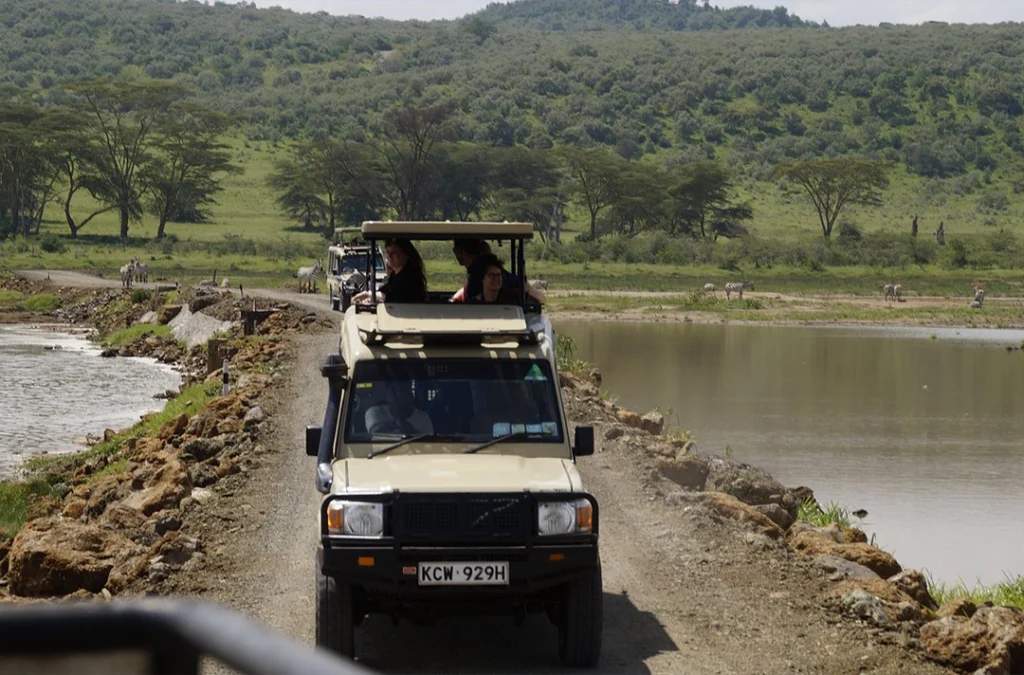
Lake Nakuru National Park is conveniently located about 160 kilometers northwest of Nairobi, making it one of the easiest parks to access in Kenya.
Its proximity to Nairobi makes it a popular destination for day trips, although staying overnight allows for a more relaxed and immersive experience.
Lake Nakuru offers a wide range of accommodation options to suit different budgets and travel styles, from simple camps to luxury lodges. You can choose to stay inside the park for a more immersive safari experience or just outside for more budget-friendly alternatives.
Sarova Lion Hill is a well-known mid-range lodge set on a hillside overlooking the lake. It offers comfortable chalet-style rooms, beautiful gardens, a swimming pool, and a restaurant with panoramic views. Its location inside the park makes it convenient for game drives, and the elevated setting provides excellent scenery, especially at sunrise and sunset.
Located inside the park, Lake Nakuru Lodge is a popular option with easy access to key wildlife areas. The lodge features spacious rooms, a swimming pool, and a restaurant with views of the surrounding landscape. Wildlife is often seen around the lodge itself, making it a great choice for travelers who want to stay close to nature without sacrificing comfort.
The Cliff Nakuru is a luxury tented camp perched on a cliff overlooking the lake, offering one of the most spectacular views in the park. The tents are spacious and stylish, with high-end furnishings, private decks, and modern amenities. Guests can enjoy fine dining, personalized service, and a more exclusive safari experience in a peaceful setting.
Ziwa Bush Lodge is a budget-friendly option located just outside the park. It offers simple but comfortable cottages and tents set in a quiet, natural environment. The lodge has a relaxed atmosphere, friendly service, and a swimming pool, making it a good choice for travelers looking for affordability while still being close to the park entrance.
When planning your visit, keep a few practical tips in mind to make the most of your experience:
Lake Nakuru stands out as a destination that combines accessibility, biodiversity, and scenic beauty. It may not be as vast as the Maasai Mara or as famous for big cats, but its unique mix of flamingos, rhinos, and picturesque landscapes makes it a must-visit park in Kenya.
Whether you are drawn by the pink hues of flamingos, the chance to see endangered rhinos up close, or simply the beauty of the Rift Valley, Lake Nakuru National Park offers an unforgettable safari experience that fits perfectly into any East African itinerary.
1. Where is Lake Nakuru National Park located?
Lake Nakuru National Park is located in central Kenya, within the Great Rift Valley, about 160 kilometers northwest of Nairobi.
2. How do I get to Lake Nakuru National Park?
The park is easily accessible by road, დაახლოებით a 2.5 to 3-hour drive from Nairobi. Visitors can also use charter flights to nearby airstrips, although most travelers prefer driving.
3. What is Lake Nakuru National Park famous for?
The park is best known for its flamingos and as a rhino sanctuary, offering one of the best chances in Kenya to see both black and white rhinos.
4. What animals can I see in Lake Nakuru?
You can see rhinos, Rothschild’s giraffes, buffaloes, zebras, impalas, waterbucks, lions, and occasionally leopards. The park does not have elephants.
5. When is the best time to visit Lake Nakuru?
The park can be visited year-round. The dry season (June to February) is best for wildlife viewing, while the wet season offers lush scenery and excellent birdlife.
6. Are flamingos always present in Lake Nakuru?
Flamingos are common but their numbers vary depending on water levels and food availability. Even when fewer flamingos are present, the park still has abundant birdlife.
7. How many days should I spend in Lake Nakuru?
One to two days is usually enough to explore the park and enjoy game drives, thanks to its compact size.
8. Can I do a self-drive safari in Lake Nakuru?
Yes, the park has well-maintained roads, making it suitable for self-drive safaris as well as guided tours.
9. Are there accommodation options inside the park?
Yes, there are several lodges and camps inside the park, as well as additional options just outside the park for different budgets.
10. Is Lake Nakuru suitable for a day trip?
Yes, due to its proximity to Nairobi, Lake Nakuru is a popular destination for day trips, although staying overnight allows for a more relaxed and complete experience.
WhatsApp us


